Britain’s Gardens Under a Neon Sun
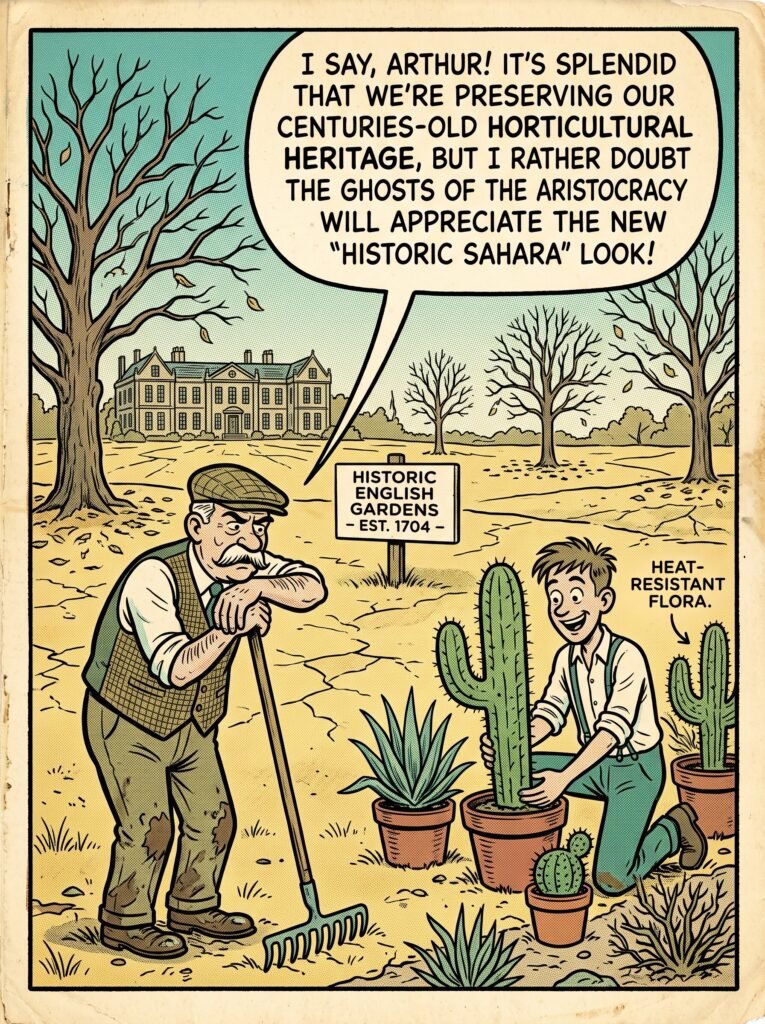
Britain, 2026: the clouds have vanished, replaced by a white cyber-sun burning through the atmosphere. Across historic estates, lawns crack like abandoned circuit boards. Centuries-old oaks and sycamores flicker into autumn months too early, their leaves dropping like corrupted data. Some trees stand silent and skeletal, their roots losing the war beneath the dust.
Gardeners move through the palace grounds with moisture sensors and solar masks, rewriting traditions once carved into generations of horticultural code. Ancient borders are being reprogrammed with lavender, sedum, yarrow, and other drought-resistant survivors. Every new planting is a small act of resistance.
The gardens still glow with echoes of the past: clipped hedges, weathered statues, fountains running on rationed water. But beneath the manicured surface, Britain is changing. To preserve these living monuments, gardeners must merge heritage with adaptation, turning historic landscapes into resilient green sanctuaries for a hotter, harder future.